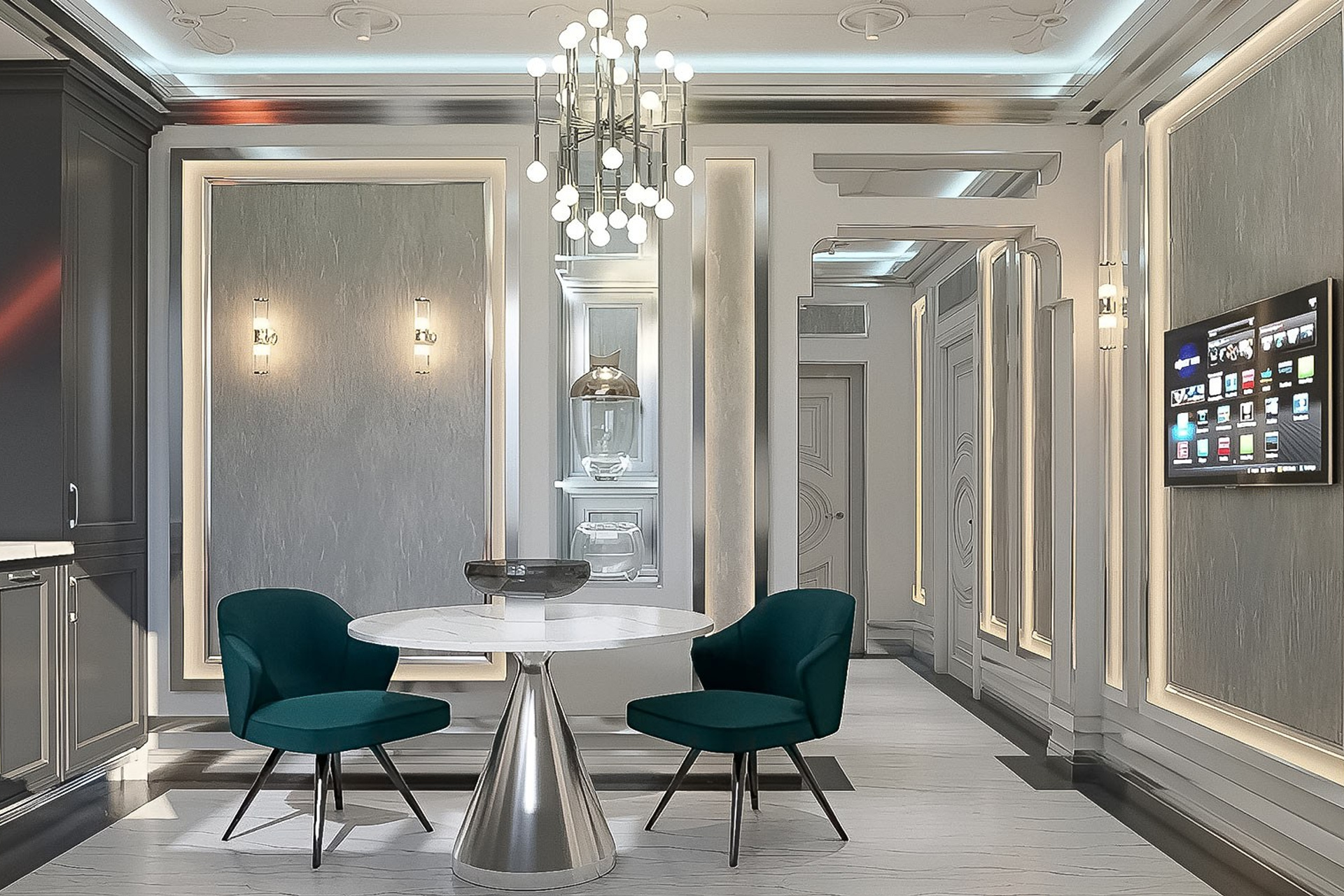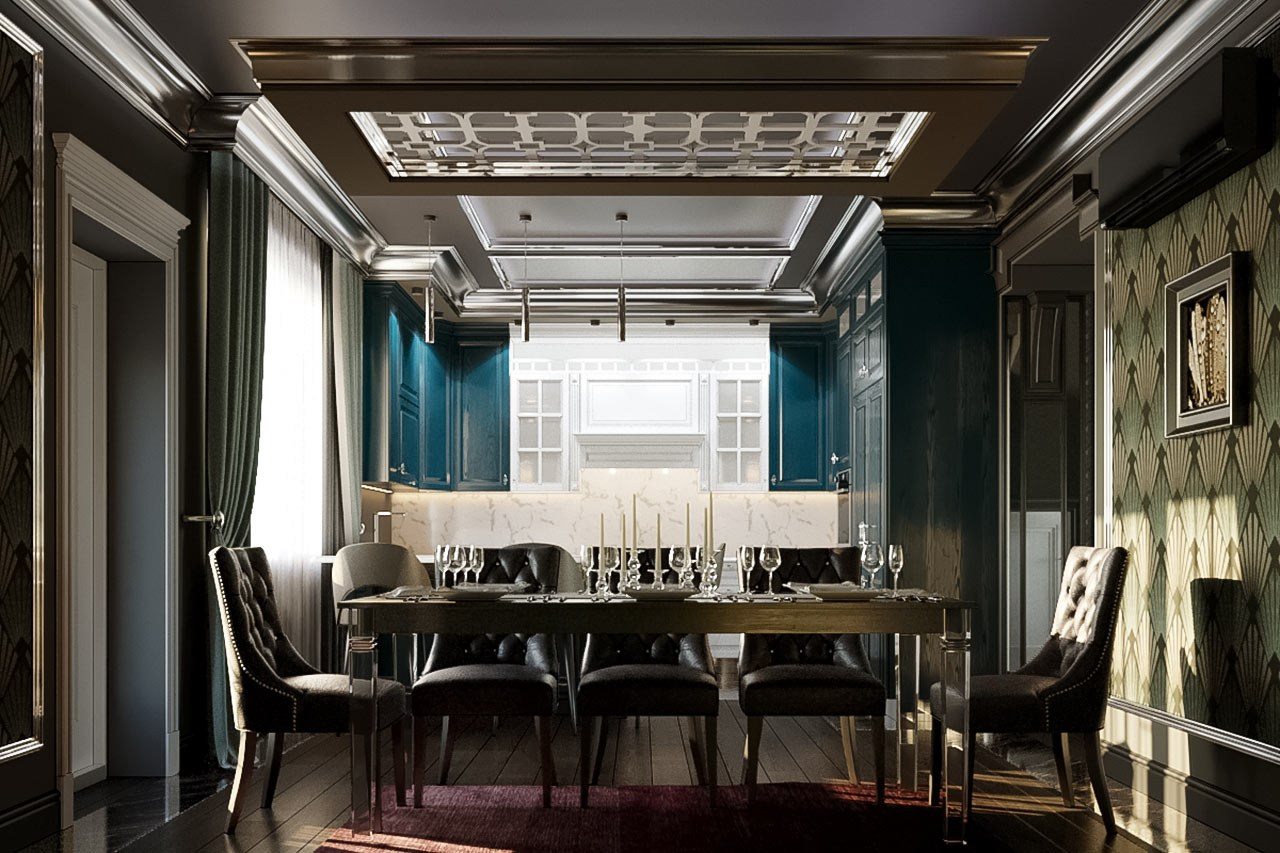
If you are looking for a timeless and harmonious interior, the classic style is an excellent choice. Its enduring popularity comes from its refined beauty and elegance. Decorative detailing, substantial furniture, and symmetry all play an important role in creating a classic interior.
This style is well suited to those who value stability and want to enjoy a beautiful setting for many years. Classic interiors, inspired by English and French rooms of two centuries ago, follow their own rules and require a certain degree of discipline.
In this guide, we explore the key principles of modern classic interior design.
Britain, France, and America
Contemporary interior design recognizes several interpretations of the classic style, with British, French, and American traditions among the most prominent.
French interiors are characterized by panoramic windows, refined plasterwork and bas-reliefs, elegant carved furniture, silk drapery, and parquet flooring.
British interiors often feature a library, fireplace, high-backed armchair, and Chesterfield sofa. Noble woods such as oak and walnut, darker tones, and decorative details inspired by the colonial era are commonly used.
American classic interiors place greater emphasis on space and open-plan living. Furniture is often substantial but used selectively. Large upholstered sofas, armchairs, and occasional tables may be included without overfilling the room with cabinets or unnecessary pieces.
Remarkable Walls
Classic interiors are often enriched with plasterwork, cornices, wall panels, and decorative moldings, all of which create a sense of refinement and architectural presence.
Intricate plaster details and elegant wall frames introduce rhythm and sophistication, while pilasters surrounding mirrors or fireplaces help establish symmetry and balance.
Ceilings may also include decorative features such as plaster rosettes around chandeliers. In contemporary interpretations, these details are often simplified while retaining their original charm.

The Harmony of Symmetry in Interior Design
A classic interior is defined by coherence and a clear stylistic language. Patterns used in curtains and cushions are usually coordinated, while furniture is often selected as part of a matching collection or made from timber in the same tone.
Despite the richness of detail, modern classic interiors maintain a sense of elegance and restraint.
Symmetry plays a central role in the composition, giving the interior a sense of order and presence. Proportion is carefully considered when planning the layout and arranging furniture.
Armchairs may be placed in pairs on either side of a table, while chests of drawers or consoles can be positioned symmetrically beside a fireplace. Lamps, wall sconces, candlesticks, and artwork are often arranged in the same way around tables, mirrors, and architectural features.

Furniture in a Classic Interior
Furniture in a classic interior is refined and elegant, with clean lines, graceful curves, harmonious proportions, and balanced symmetry.
Classic sofas often feature rounded armrests, low legs, and fine timber detailing. Upholstery is typically made from natural leather or high-quality textiles, complemented by patterned cushions and decorative trims such as fringe.
Occasional tables are commonly crafted from solid wood, marble, or glass. They may feature carved details, decorative inlays, straight or curved legs, and round or rectangular tops.
Natural fabrics such as silk, satin, velvet, and damask are well suited to furniture upholstery. Subtle botanical patterns, stripes, and plain fabrics all work particularly well.
When arranging furniture, symmetry and proportion should remain the guiding principles.
A classic bedroom may include a wardrobe, bed, dressing table, bench or ottoman, and bedside tables.
For the kitchen, a coordinated dining set and cabinetry in light or natural tones are recommended. Patinated finishes, symmetrical panel detailing, curved corner fronts, and glass inserts can help reinforce the classic aesthetic.
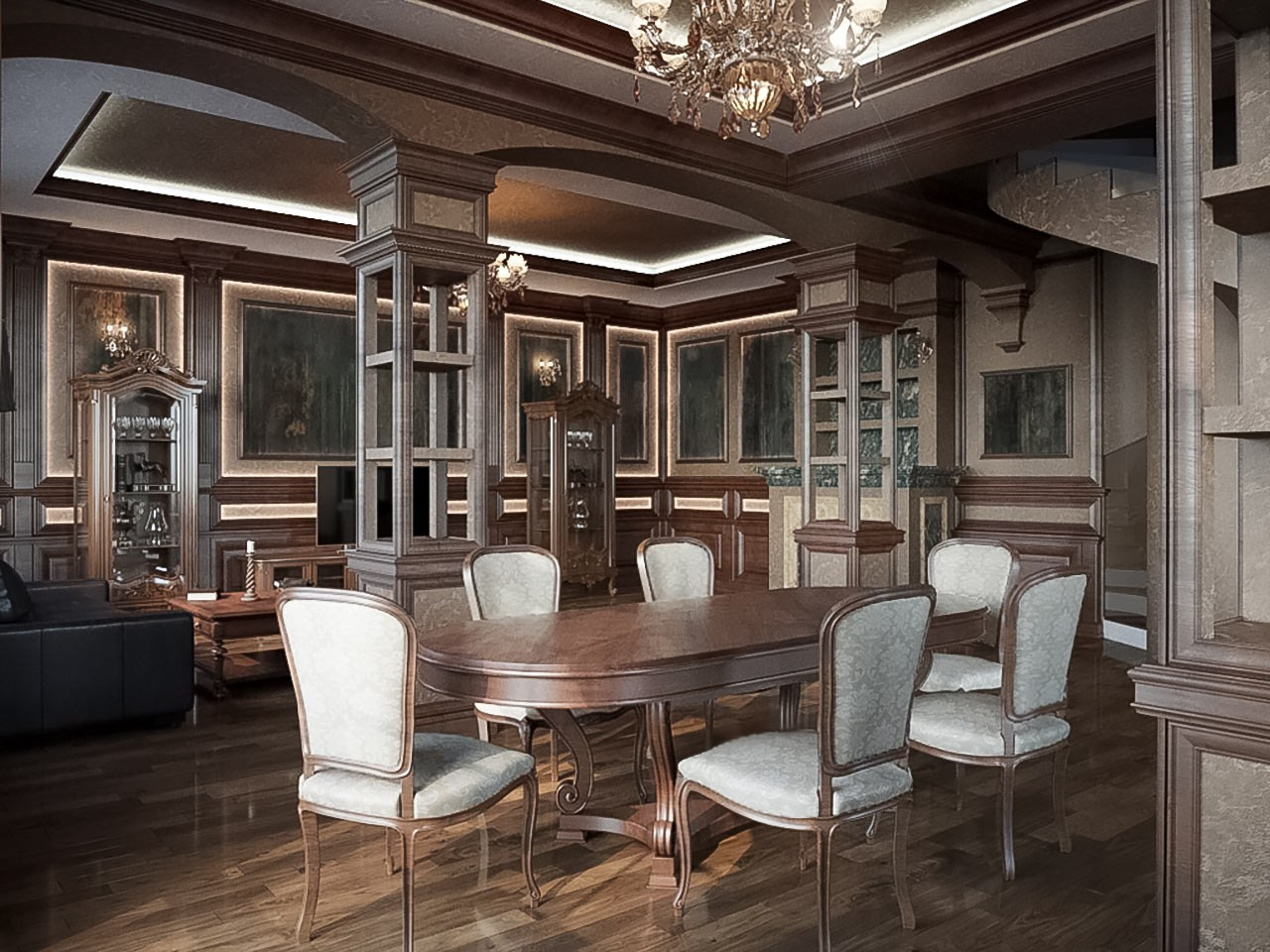
A Restrained Color Palette
The color palette of a classic interior is defined by calm and elegant harmony.
Neutral tones such as cream, beige, and warm brown are most commonly used, creating an atmosphere of comfort and refinement.
Walls are usually finished in muted shades, although they may also feature wallpaper with delicate floral motifs, fine stripes, or jacquard-inspired patterns.
Curtain fabrics, upholstery, and decorative cushions are carefully coordinated with the overall style of the room.
Bright colors are used sparingly, with green and blue among the preferred accent shades.
Touches of gold or silver may be introduced through decorative details, but always with restraint to avoid an overly dramatic effect.
The overall finish should feel polished and traditional, without harsh contrasts.

Mirrors and Other Stylish Accessories
Accessories often include antiques, works of art, and decorative objects such as busts, boxes, silverware, and candlesticks.
Pieces with a sense of age or patina can add authenticity. They should be made from durable, high-quality materials such as marble, precious metals, wood, or porcelain.
Careful placement is essential to avoid visual clutter.
Large mirrors in gilded frames are among the most popular decorative elements. They not only make the room feel larger, but also add elegance and depth.
Layered window treatments, including sheer curtains and heavier drapery, also play an important role in a modern classic interior.
Current interpretations favor more refined and understated decorative solutions while preserving a sense of elegance.
Floors are typically finished in timber or parquet, often in a darker tone than the furniture.
Large patterned rugs inspired by Persian or Turkish traditions, particularly those made from high-quality wool, add warmth and comfort.
A fireplace, where space and budget allow, can become the focal point of a classic living room. It reinforces symmetry and serves as a visual anchor for the entire composition.

Conclusion
Modern classic interiors are defined by refined simplicity and a preference for balanced, symmetrical furniture arrangements.
This approach creates a warm and welcoming atmosphere while keeping the space practical and comfortable for everyday family life.
Well-chosen unconventional details can add individuality to a classic interior, making it more distinctive, personal, and memorable.
Magazine